Brian Gormley
New York City, b. 1959
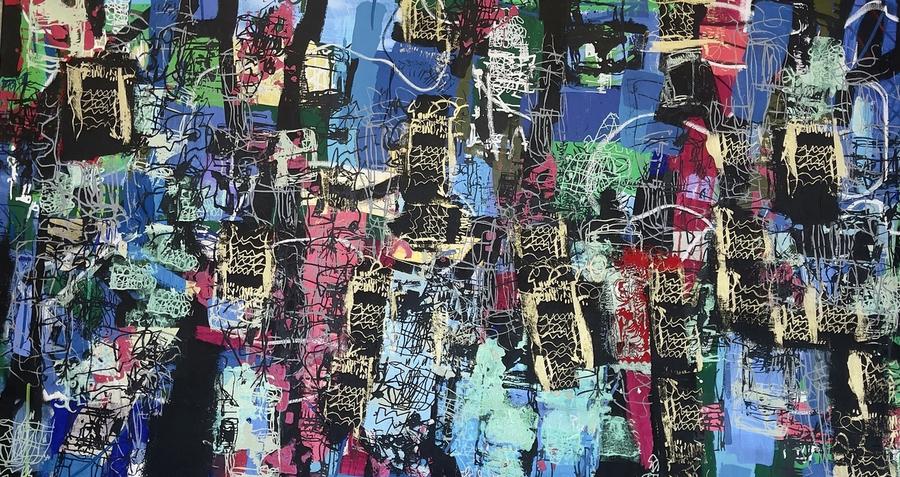
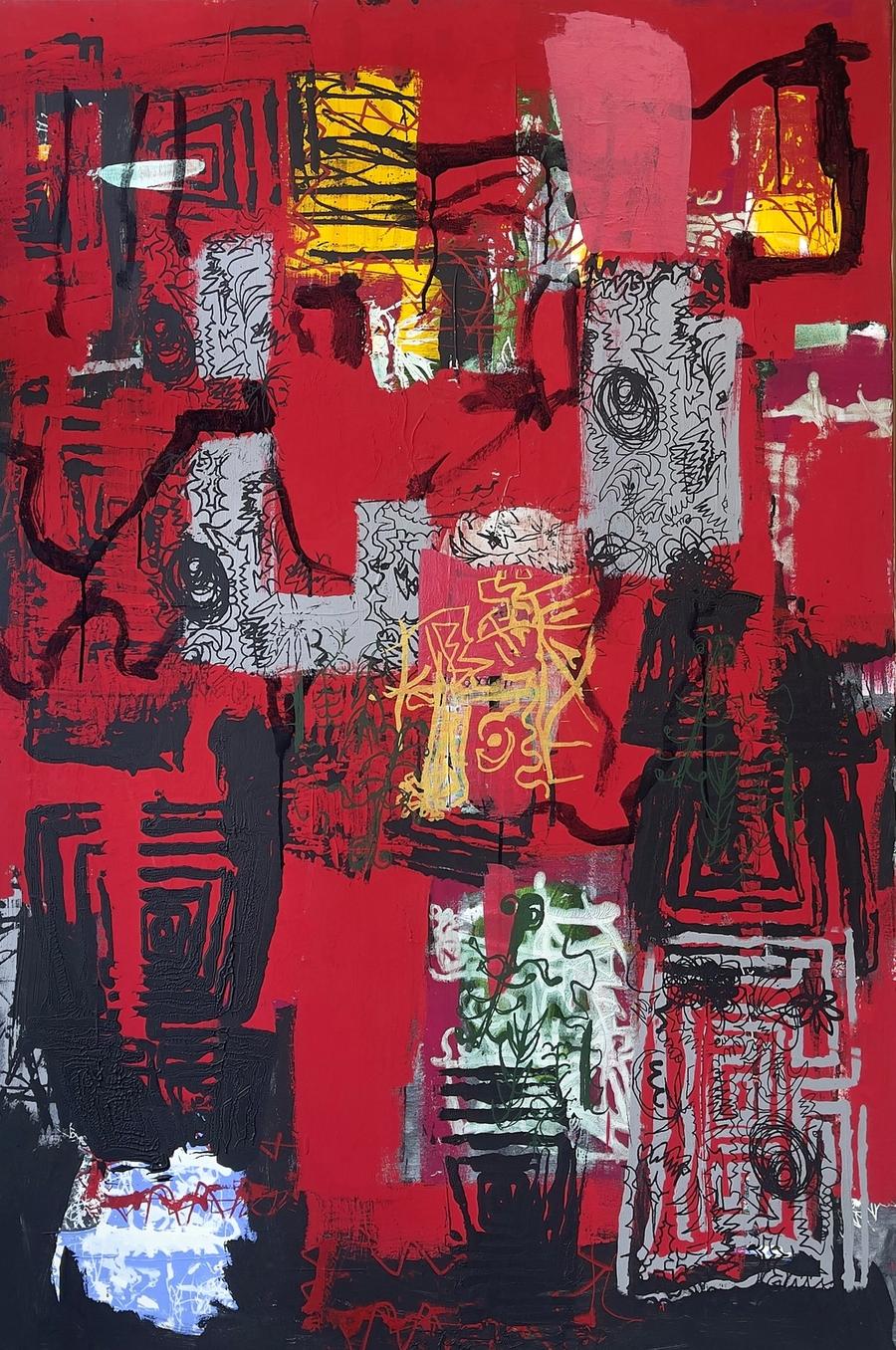
Emerging from the East Village art scene of the mid-1980s, as street art began to transfer to the studio, these works, composed of abstracted symbols from Gormley's subconscious, are his drawings of the mind. Enlarged onto silkscreens, which are then used as a medium of transference much in the same way others might use a brush, they are applied to static canvas. It is here where they find traction, rising above representation of the real to freedom of abstraction. The pulse of life caught from that 'enchanted loom, where millions of flashing shuttles weave a dissolving pattern' (Sherrington 1940).
Following on from André Masson's more contemporary automatic drawings of the 1930s, and Jackson Pollock's later drip painting of the late 1940s, Gormley's work delves much further back, to the ancient and primitive subliminal. The further back we go, he contends, the better the art gets; the palaeolithic paintings of Lascaux, the Spanish cave paintings of Altamira, the early aboriginal rock art of Western Australia. All unparalleled sophisticated primitivism.
The existential fight continues, that our time on this 'mote of dust suspended in a sunbeam' (Sagan 1994) is not wasted. While the universe itself may have no inherent meaning, we, as individuals, can construct what it means to us. That we saw, that we understood. That we left our mark. This was, is, Gormley's quest — to remember, and be remembered. As evolution folds ever forward, one epoch to the next.